Martial Arts Geelong
Teen Martial Arts Training
Ages 11–15 · Bujinkan Ninjutsu · Geelong
Practical self-defence built for the real world — not the tournament floor.
The Program
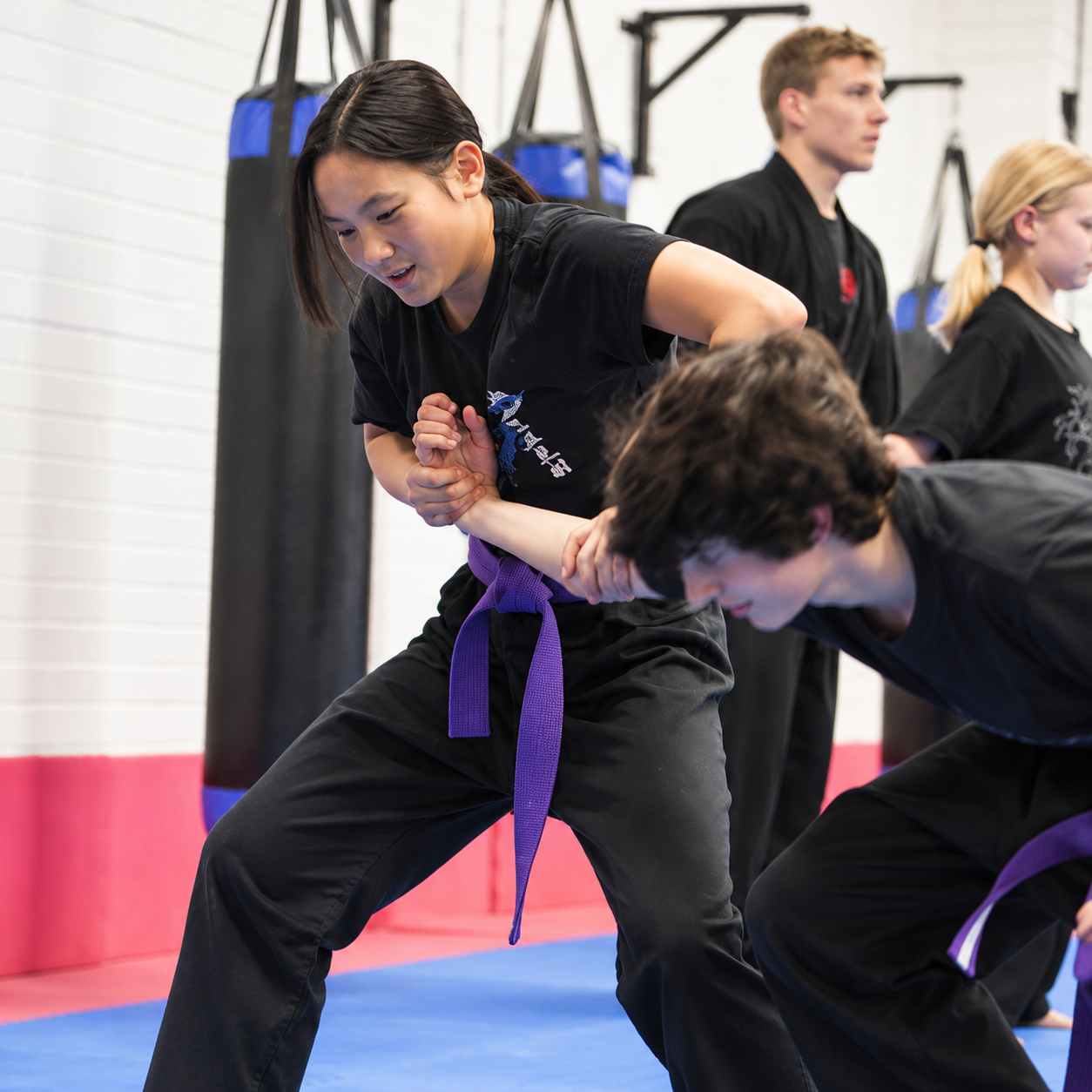
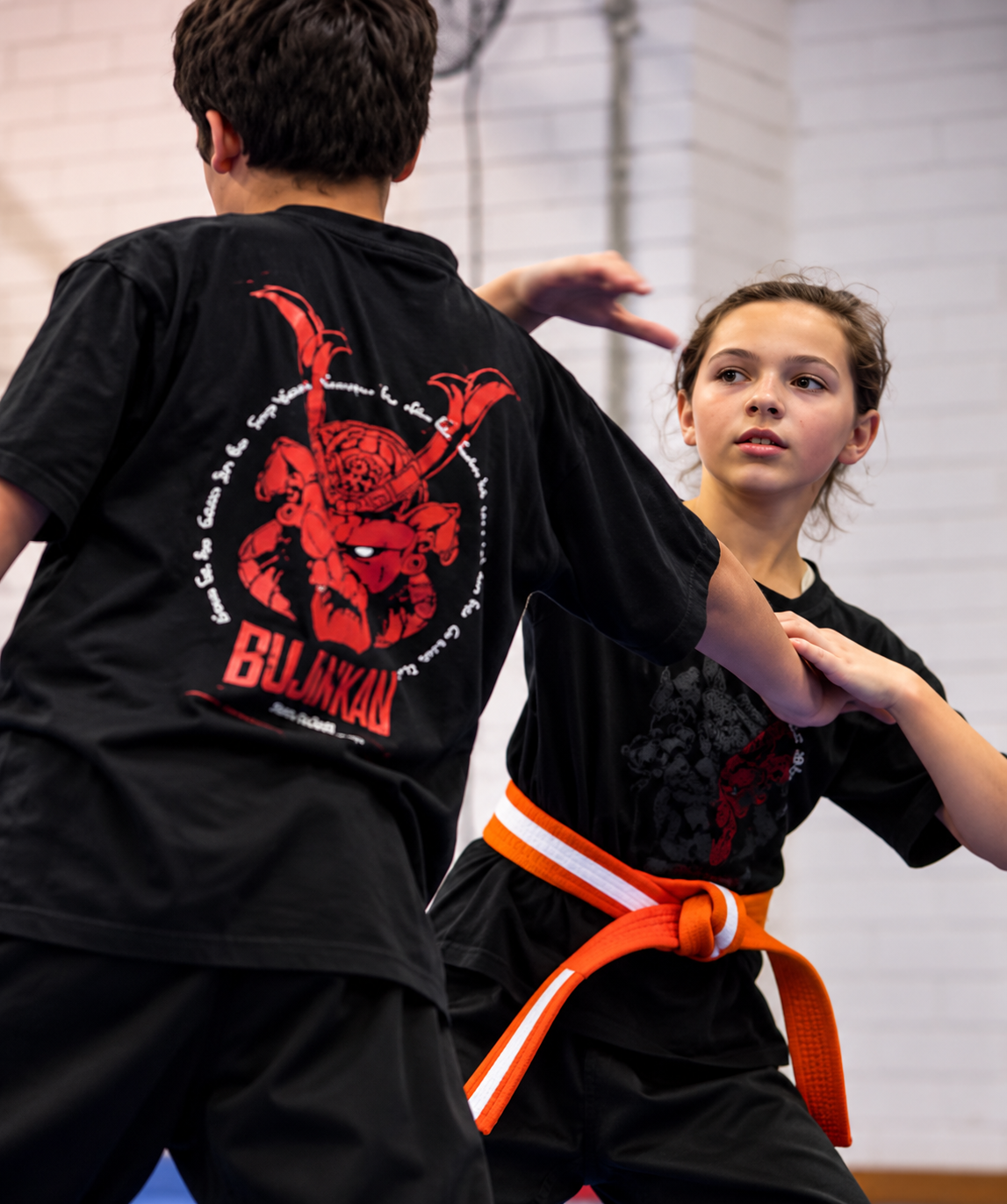
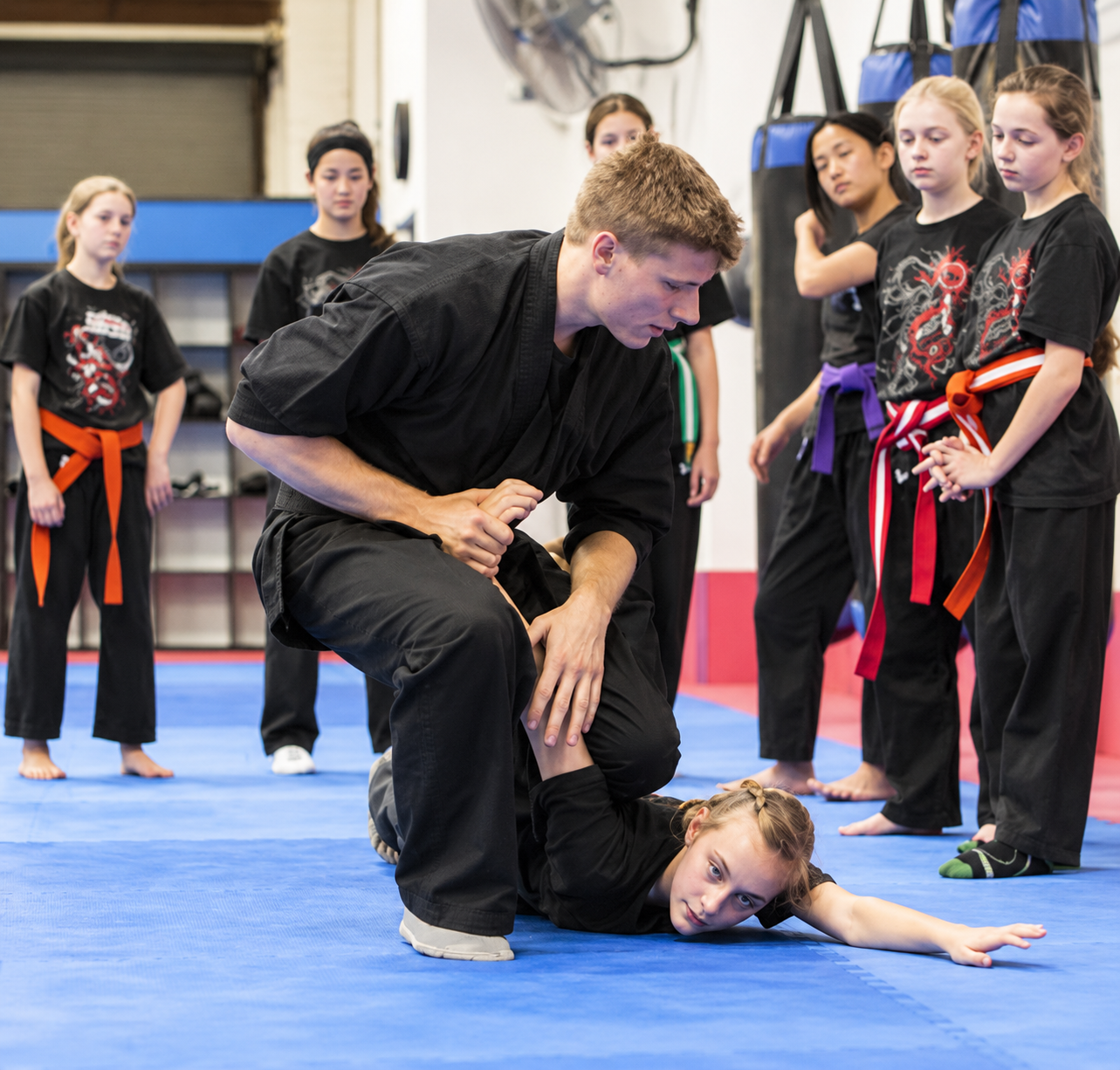
Our Teen Martial Arts program trains students aged 11 to 15 in authentic Japanese Ninjutsu with a clear, uncompromising focus on real-world self-defence. This is not sport martial arts. There are no tournaments, no point-scoring, and no techniques designed for competition conditions.
That distinction is critical. In most sport-based programs, students are conditioned never to strike the head — because the rules forbid it. In a real confrontation, that conditioning becomes a liability. We train the opposite: awareness, protection, and the instincts that actually keep people safe.
Curriculum
A Critical Skill
Those figures cover robberies alone — not assaults, not murders, not other knife-related crimes. And yet the vast majority of martial arts schools teach little or no structured knife defence. Most students training elsewhere have no rehearsed, tested response to a knife attack.
Researchers note that teenagers and young men are increasingly carrying knives — with incidents beginning as early as primary school age. When someone draws a knife, it is too late to wish you had trained for it.
Rob Baard's commitment to this area is personal. Knives have been pulled on him at work, walking near his own home, and during his school years growing up in a rough neighbourhood. That lived experience — combined with decades of structured Bujinkan training — shapes how and why we teach this material.
At Martial Arts Geelong, knife defence is built into every term of training. We also run dedicated knife defence seminars throughout the year, and strongly encourage all Teen students to attend.
Traditional Weapons
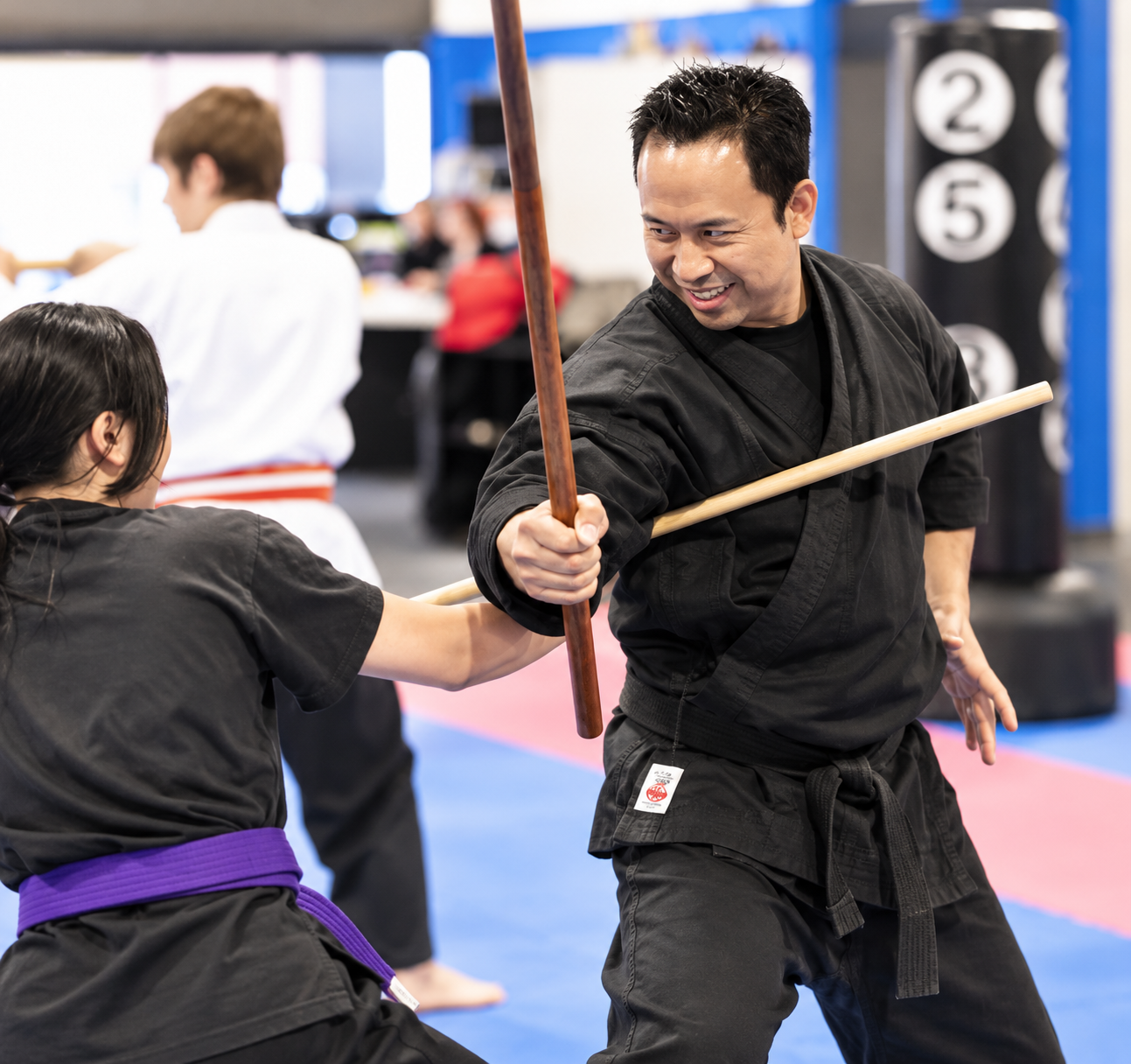
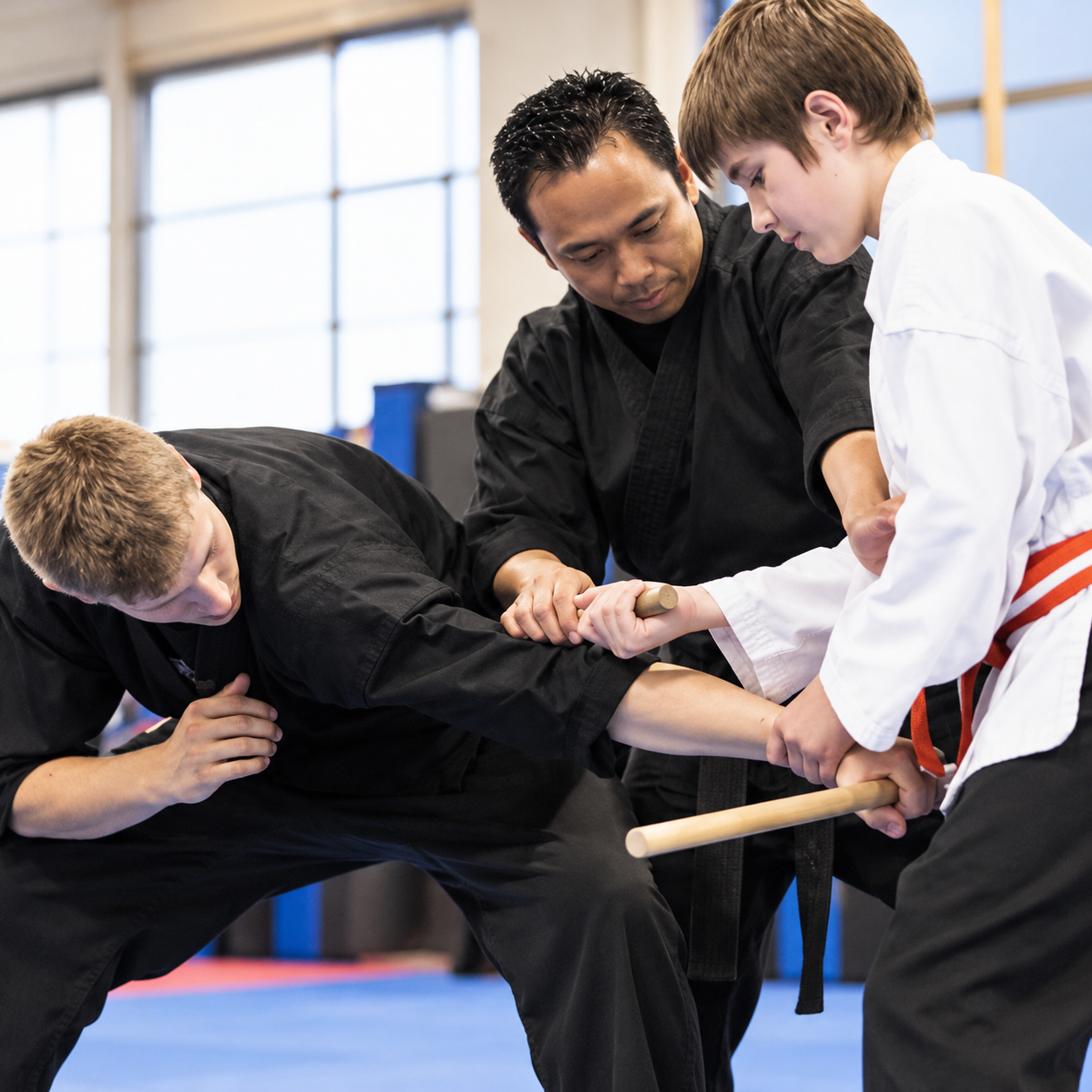
Teen students train with the Hanbo (3-foot staff) and Bo (6-foot staff) — traditional Japanese weapons with genuine practical application. The Hanbo has its origins in the Bo staff, historically cut or broken in battle, and remains one of the most versatile close-range weapons in the Bujinkan syllabus.
Training covers strikes, blocks, spinning methods, and structured prearranged sequences from basic through to intermediate level.
Students will almost certainly never need to use weapons training in a real situation — and that is exactly as it should be. What weapons training consistently develops is body control, coordination, timing, spatial awareness, and focused attention. Students rate it among the most enjoyable parts of their training without exception.
Beyond the Physical
The skills developed in this program extend well beyond physical technique. Teens who train consistently develop the mental composure to assess situations calmly, make sound decisions under pressure, and carry themselves with genuine confidence — not performance.
Those qualities show up in school, in relationships, and throughout adult life. Parents regularly comment on the positive changes they see in their children — not just physically, but in how they handle difficulty, respond to challenge, and treat those around them.
The Evidence
The following articles from credible Australian media sources document the reality of knife crime in Victoria. This is not alarmism — it is the informed context behind why we train the way we train.
Get In Touch
Enquiries welcome for classes, seminars, on-location training, and private instruction.
Your message has been sent. We will be in touch soon.

Shihan 14th Dan · Japan-licensed Shidoshi